Distress Tolerance
In DBT, Distress Tolerance skills are used when it is difficult or impossible to change a situation.
Distress Tolerance skills are used to help us cope and survive during a crisis, and helps us tolerate short term or long term pain (physical or emotional).
Tolerating distress includes a mindfulness of breath and mindful awareness of situations and ourselves.
Radical Acceptance
Acceptance means being willing to experience a situation as it is, rather than how we want it to be.
To be repeatedly 'turning the mind'.
To be in the actual situation you are in, rather than the situation you think you're in, or think you should be in.
Your mind is always going to give you other ideas, interpretations, reminding you of old strategies - whether helpful or unhelpful.
Each time your mind wanders and you notice these other thoughts and images, simply bring your attention back to this moment.
Don't judge the situation to be good, or bad, or in any way. Simply bringing your attention back to this moment, right now, this situation, and being effective in this situation.
You may need to 'turn your mind' many many times in a short space of time.
What Radical Acceptance is NOT:
- Not judging the situation to be good
- Not giving permission for the situation to go on forever
- Not giving up your options
It can help to use memory aids to remind us of how we can help ourselves during distressing times:
IMPROVE the moment
I Imagery – e.g. safe place visualisation
M find Meaning in the situation
P Prayer – meditation, spirituality, affirmations
R Relaxation
O One thing at a time
V Vacation – take some time out of the situation, 'me' time, or imagining yourself on an idyllic beautiful holiday
E Encouragement – positive and calming self talk
Wise Mind ACCEPTS
A Activities (see distraction ideas below)
C Contributing – helping others
C Comparisons – comparing self with (better) self
E Emotions – generate different emotions by watching movie/tv, listening to music etc
P Pushing away – thinking about or putting our attention onto something else
T Thoughts - new thoughts. E.g. counting, playing 10 (10 colours in room, 10 fruits, 10 Bond films etc), or 54321 (5 things I can see, 4 things I can hear, 3 things I can touch, 2 things I can smell or like the smell of, 1 slow deep breath)
S Sensations – use seeing, hearing, smelling, tasting and touching senses
DISTRACTION Ideas
Distraction helps us feel better by diverting our attention away from the distressing thoughts. It works even better if you choose something that will really grab your attention and keep you absorbed in that activity.
Different things work for different people. It’s worth trying and practising lots. Use the suggestions below, and more that you think of yourself, a few times each before giving up on it.
Click here for DISTRACT page
Learn effective DBT & CBT skills online - The Decider Skills for Self Help online course
The Decider Therapeutic Skills online training for professionals
- DBT Dialectical Behaviour Therapy
- MP3 guided imagery and relaxation downloads
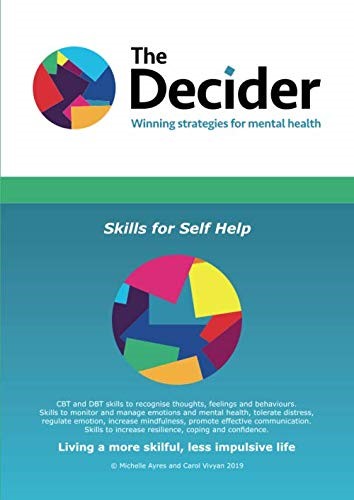
- The Decider - an pictorial prompt sheet and manual to help us choose the best coping skill
- Relaxation
- Self-Help Course Step 1
- Mindful Breathing
- Colour Breathing
- Anxiety Self-help
- Depression Self-help
- Anger Self-help
- Multimodal Self-Help & Treatment Plan
- STOPP
- Defusing Exercises
- Different Perspectives
- The Helicopter View
- Imagery Self-Help
- NOW
- Meditation
- Accept, Change Or Let go?
- ACE Activity
- Emotion Regulation
- Interpersonal Effectiveness
More Information:

Books
DBT® Skills Training Handouts and Worksheets

The Dialectical Behavior Therapy Skills Workbook: Practical DBT Exercises for Learning Mindfulness, Interpersonal Effectiveness, Emotion Regulation ... Tolerance

DBT Made Simple: A Step-by-Step Guide to Dialectical Behavior Therapy
The Expanded Dialectical Behavior Therapy Skills Training Manual: Practical DBT for Self-Help, and Individual & Group Treatment Settings

BOOKS WE LOVE